
Laos Travel Guide: The Mekong, the Temples and the 4000 Islands
Most people arrive in Laos by boat, and that’s not an accident of geography. The Mekong slow boat from Huay Xai to Luang Prabang is still the way a huge share of visitors enter the country, and it sets the tone for everything that follows: slow, river-bound, and a little rougher around the edges than the postcards suggest. This guide covers that boat trip in detail, then works south through Luang Prabang, Vang Vieng, Vientiane, and the 4000 Islands, with the visa costs, border crossings, and infrastructure realities you need before you book anything.
Get Free Consultations
The Mekong Slow Boat: Huay Xai to Luang Prabang
The classic route starts in Huay Xai, a border town on the Lao side of the Mekong opposite Chiang Khong in Thailand. From there, the slow boat covers roughly 300 km downriver to Luang Prabang over two days, with a mandatory overnight stop in the halfway town of Pakbeng. There’s no way to do it in one day unless you pay for one of the faster tourist-boat-and-minivan combos that skip most of the river.
What it costs: standard vs. premium
The public slow boat is bought at the pier in Huay Xai, not online, and the price has crept up over the past couple of years. Expect to pay somewhere between 200,000 and 300,000 kip per person for the two-day trip (roughly $10-15), sometimes split into two separate legs of around 100,000-150,000 kip each, paid in cash only. Travel agencies in town and in Luang Prabang sell bundled tickets that include a tuk-tuk to the pier for 400,000-750,000 kip, which is worth it if you don’t want to negotiate transport yourself at 7 a.m.
That price buys you a seat and nothing else. No meal, no guide, no cushion. The boats are converted long-tail cargo boats lined with rows of old bus seats or bare wooden benches, and they fill up fast, so getting there 30-45 minutes before departure matters more than the ticket price does.
The premium alternative is a small-group cruise, most commonly Shompoo Cruise or a similar Luang Say-style operator. These run $130-200 per person one-way for the same two-day, one-night journey, and the price includes a proper seat, an English-speaking guide, lunch on board both days, and stops at Pak Ou Caves and a couple of riverside villages that the public boat sails straight past. Some packages include the Pakbeng hotel; most don’t, so check before you book. If you’re traveling as a couple or in a small group and the difference between $20 and $150 isn’t going to break the trip, the premium boat is the more comfortable call, especially for anyone over six feet tall or with a bad back.
Pakbeng: what the overnight stop is actually like
Is it worth it versus flying?
Honestly, it depends on what you’re optimizing for. Flying from Chiang Mai or Bangkok to Luang Prabang takes a few hours and costs anywhere from $60 to $150 one-way depending on how far ahead you book. The slow boat takes two full days, most of it spent sitting.
The wooden benches on the public boat are genuinely uncomfortable by the second day — your back and tailbone will remind you of this by hour four, and there’s limited room to stretch out or move around on a full boat. The engine noise and diesel fumes at the stern aren’t pleasant either. If you get seasick easily or have a bad back, this is worth weighing seriously before you commit two days to it.
That said, the scenery is the actual point: limestone cliffs, riverside villages with kids waving from the bank, water buffalo, and a version of rural Laos you don’t see from a plane window or a paved highway. If you’ve built slack into your itinerary and treat the discomfort as part of the deal rather than a flaw in it, it delivers something a flight can’t. If you’re tight on time or firmly prioritize comfort, fly and spend the two days you saved in Luang Prabang or the 4000 Islands instead. Bring a cushion either way — it’s the single best $2 you’ll spend on this trip.
Luang Prabang
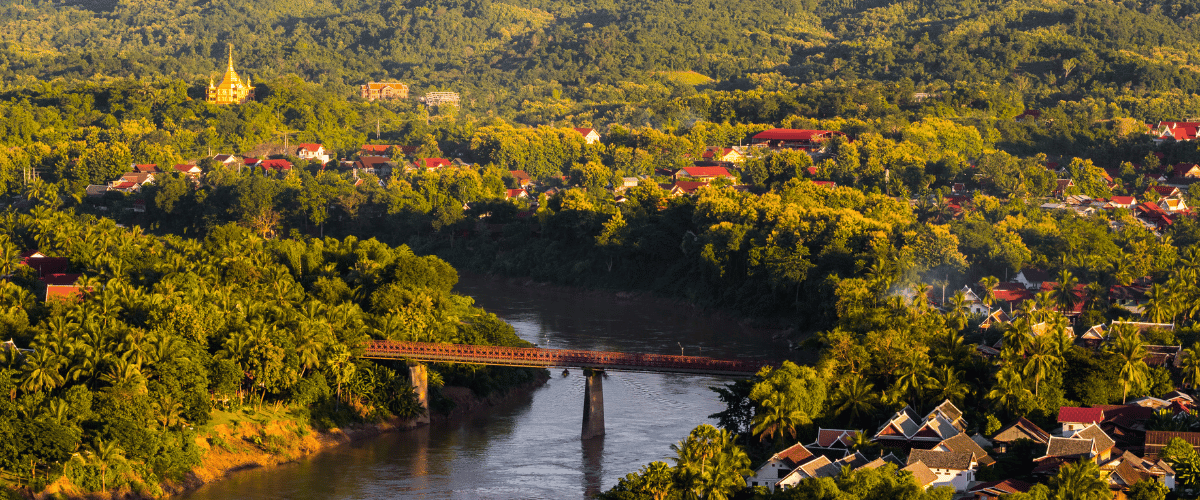
Luang Prabang sits at the confluence of the Mekong and Nam Khan rivers, and its old town — a mix of gilded Buddhist temples and French colonial shophouses — is a UNESCO World Heritage Site. It’s compact enough to cover on foot or by bicycle in two or three days.
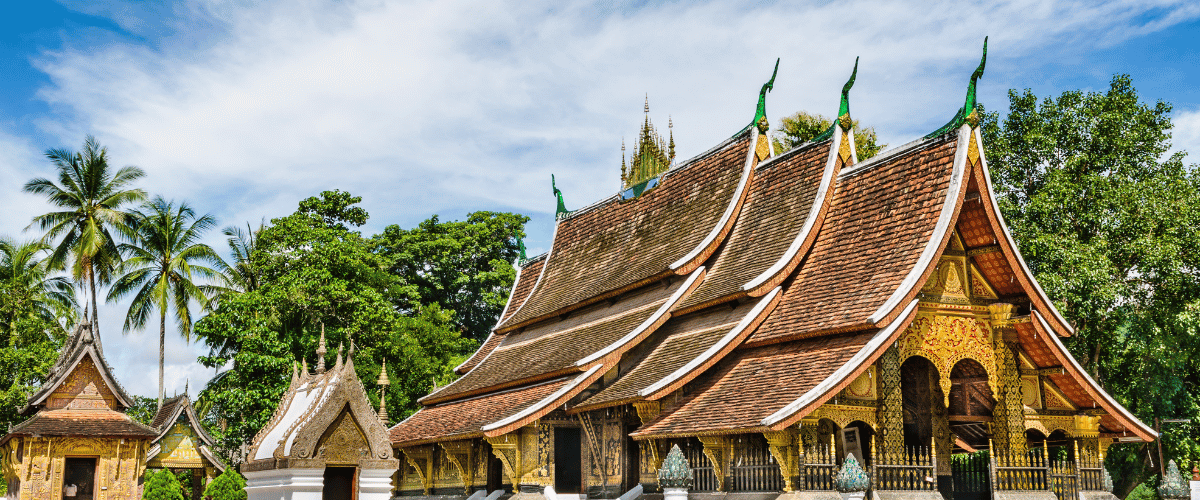
Temples: Wat Xieng Thong, near the tip of the peninsula, is the most important temple in the city and the one to prioritize if you only see one — its sim (ordination hall) dates to 1560 and the rear wall carries an elaborate mosaic of a “tree of life” in colored glass. Wat Mai, next to the former royal palace, has an intricately carved five-tiered roof and gold relief panels depicting the life of the Buddha. Climbing Mount Phousi, the hill in the center of town, gets you to Wat Chom Si and a sunset view over the rooftops and rivers; go early, since the summit gets crowded by 5:30 p.m. in high season.
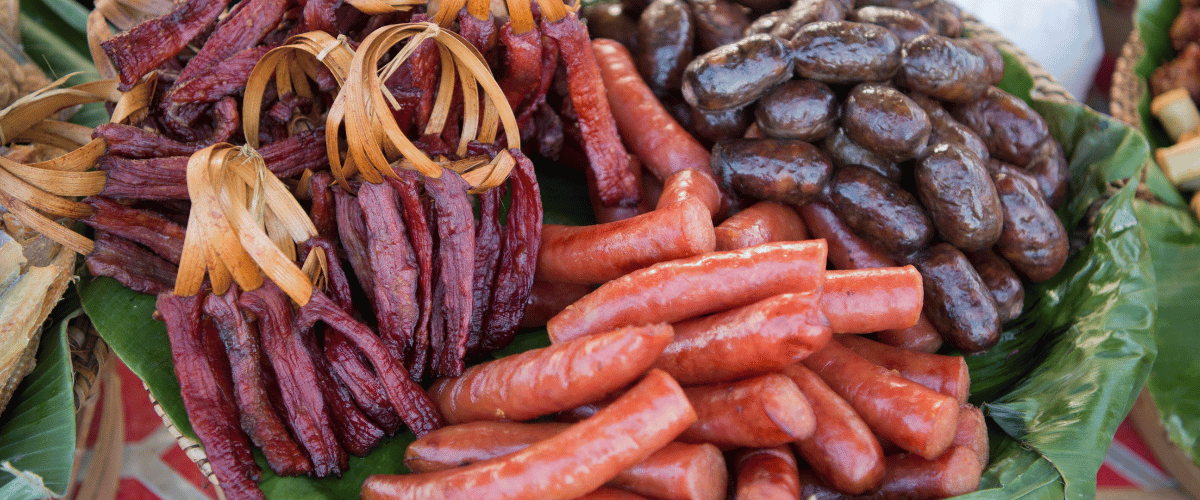
The night market: Sisavangvong Road closes to traffic every evening around 5 p.m. and fills with stalls selling handwoven textiles, silver jewelry, saa paper lanterns, and Beerlao-branded everything. Prices are soft — bargaining is expected and usually knocks 20-30% off the first quote. The food stalls in the alley behind the main market strip (locally called the “food street”) sell plates of Lao-style barbecue, sticky rice, and vegetables for 15,000-25,000 kip, and it’s a better value dinner than most of the sit-down restaurants nearby.
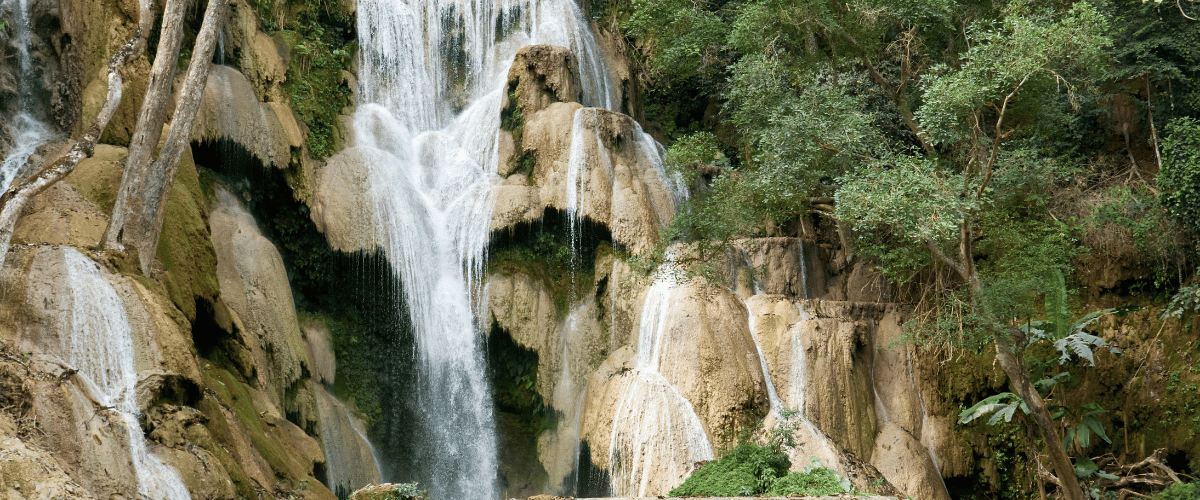
Kuang Si Falls: About 29 km south of town, this multi-tiered turquoise waterfall is the single best day trip from Luang Prabang. Entry runs around 20,000-25,000 kip (roughly $2-3) and includes access to the Tat Kuang Si Bear Rescue Centre, which rehabilitates Asiatic black bears pulled from the illegal wildlife trade. You can swim in several of the lower pools, though not the main cascade. A shared tuk-tuk round trip costs $5-7 per person; a private one runs closer to $20-25 for the group. Go before 10 a.m. if you want the pools without a crowd — tour buses start arriving mid-morning.
Since 2021, Luang Prabang has also been connected to Vientiane by the Laos-China Railway, cutting what used to be an eight-to-ten-hour road trip down to about two hours for around $16-20 for a second-class seat. Tickets sell out fast and only go on sale a few days ahead, so book through the LCR Ticket app or a local agent rather than assuming you can walk up same-day.
Vang Vieng: Past the Party Reputation
Vang Vieng earned its reputation in the 2000s and early 2010s as a lawless riverside party town built around tubing and bucket cocktails, and much of that scene has genuinely wound down — most of the riverside bars that fueled it were shut by the government years ago. What’s replaced it is a mixed identity: a legitimate outdoor-adventure base set against limestone karst scenery, still with a visible backpacker nightlife layer that hasn’t disappeared entirely.
The karsts and caves are the real draw now. Tham Chang, a cave with an underground pool right in town, and Blue Lagoon 1 (Tham Poukham), with its rope swing and turquoise water, are the two most-visited stops, both easily reached by scooter or bicycle in under 30 minutes. Kayaking down the Nam Song River, rock climbing on the limestone cliffs, and hot-air balloon rides over the valley at sunrise have become the more prominent activities marketed to visitors today.
There is a serious safety point to be direct about here: in November 2024, six foreign tourists died and several more were hospitalized after drinking methanol-laced alcohol at a hostel in Vang Vieng. The U.S., UK, and Australian governments issued formal alerts afterward, and methanol poisoning risk is still flagged in current travel advisories for Laos. Stick to sealed, brand-name drinks, be wary of free shots or homemade rice spirits (“Lao Khao”) offered at guesthouses and bars, and know the early symptoms — they can look like ordinary drunkenness for the first several hours before becoming a medical emergency. This isn’t a reason to skip Vang Vieng, but it’s a real risk that deserves more attention than a passing mention in a packing list.
The road between Vang Vieng and Luang Prabang has also been flagged by the U.S. embassy as one to avoid traveling after dark, given poor road conditions and limited transport options once the sun goes down. The 2021 railway now offers a 50-minute alternative between the two towns for roughly $9-12, which sidesteps that stretch of road entirely and is worth taking instead of a night bus or self-drive.
Vientiane
Laos’s capital feels closer in pace to a large provincial town than a national capital, which is part of its appeal. Wat Sisaket, with its cloistered walls holding thousands of small Buddha images, is the oldest surviving temple in the city. Pha That Luang, the gold-covered stupa that appears on the national emblem, is the most important religious monument in the country and worth visiting around sunset when the gold catches the light. The Patuxai arch, a Lao twist on the Arc de Triomphe built with cement partly donated for a runway that was never built, sits at the top of a long, walkable boulevard and has a viewing platform at the top for a small fee.
Vientiane is also where most land border crossings from Thailand funnel through, via the Thai-Lao Friendship Bridge connecting Nong Khai to the Thanaleng border post just outside the city — more on that below. Most visitors treat Vientiane as a one-to-two-night stop between the airport, the border, and points north or south rather than a primary destination, and that’s a reasonable way to plan it.
The 4000 Islands (Si Phan Don)
Si Phan Don sits in the far south of Laos, near the Cambodian border, where the Mekong widens out and splashes around thousands of small islands and sandbars. The two islands most travelers visit are Don Det, the backpacker-oriented one with the guesthouses and bars, and Don Khon, quieter and more geared toward travelers who want hammocks and river views over nightlife. A French colonial-era railway bridge connects the two.
Getting there from Pakse: Buses and minivans run from Pakse’s southern bus terminal to Ban Nakasong, the mainland gateway town, several times a day between roughly 7 a.m. and 3 p.m. The trip takes 2.5 to 3.5 hours and costs $5-11 depending on whether it’s a public bus or a tourist minivan with a boat transfer included. From Nakasong, a short ferry across to Don Det or Don Khon costs an additional $1-3 per person. Try not to leave Pakse later than early afternoon, since options thin out after dark.
Irrawaddy dolphins — an honest update: Older guidebooks and tour listings still advertise dolphin-watching trips near Don Khon, but this needs a correction. The Irrawaddy dolphin population that lived in the pool straddling the Laos-Cambodia border went extinct in Laos in February 2022, when the last individual died after becoming entangled in fishing gear. What remains of the Mekong’s dolphin population — fewer than 100 individuals — now lives entirely on the Cambodian side, in a stretch of river near Kratie. Boat trips sold locally as “dolphin watching” near Don Khon will take you to the old viewing spot and the scenery is still worth it, but manage your expectations: you’re very unlikely to see a dolphin there anymore. If seeing one is a priority, that trip now needs to happen from Kratie, across the border in Cambodia, not from Laos.
Beyond that, Si Phan Don is worth two or three days for its own sake: Khon Phapheng, Southeast Asia’s largest waterfall by volume, and the Liphi (“Somphamit”) falls on Don Khon are both worth the short trips out, kayaking around the islands is easy to arrange on either island, and the pace of life here — hammocks, sunsets, no real agenda — is the whole point after a faster-moving stretch of the trip further north.
Visa on Arrival and E-Visa
Most nationalities need a visa to enter Laos; a shortlist of ASEAN and a few other countries get visa-free entry for 14-30 days, but US, UK, Canadian, Australian, and most European passport holders do not. Visa on arrival is available at Vientiane and Luang Prabang international airports and most (not all) land border crossings, and it costs $30-45 depending on nationality — US and UK citizens typically pay around $35-40, while a handful of nationalities pay less. It’s payable in cash US dollars only at most crossings; bring clean, unmarked bills, since torn or heavily worn notes get rejected. You’ll also need one passport photo, or you’ll be charged a small extra fee (usually $1-2) to have one scanned from your passport on the spot.
The alternative is the official e-visa, applied for in advance at laoevisa.gov.la, which runs a similar $40-50 depending on nationality and takes 2-3 business days to process. It only works at a specific list of entry points — mainly the main international airports and the busiest land crossings — so check that your planned entry point accepts it before you rely on it instead of visa on arrival.
Best Time to Visit
The dry season, November through February, is the most comfortable window: daytime temperatures sit in the high 20s Celsius (low 80s Fahrenheit) in the lowlands, humidity is manageable, and this is also when Pi Mai Lao (Lao New Year, mid-April) and other festivals cluster — though Pi Mai itself falls in the hot season. March through May gets hot and dry, often hitting the mid-to-high 30s Celsius, and this is also burning season in the north, when agricultural fires create heavy smoke haze around Luang Prabang and northern Laos that can affect both visibility and air quality for weeks at a stretch. June through October is the wet season: expect afternoon downpours, higher Mekong water levels (which can actually speed up the slow boat, since the current runs faster), and a real chance that some rural roads become difficult or impassable after heavy rain.
A Realistic 2-3 Week North-to-South Route
- Days 1-3: Cross from Thailand at Huay Xai, take the slow boat to Luang Prabang with the overnight in Pakbeng.
- Days 4-6: Luang Prabang — temples, night market, Kuang Si Falls, Pak Ou Caves.
- Days 7-9: Train or bus to Vang Vieng — caves, kayaking, karst scenery.
- Days 10-11: Train to Vientiane — temples, Patuxai, a day or two before heading south.
- Days 12-13: Fly or take an overnight bus from Vientiane to Pakse (the overland trip is 10+ hours; flying takes about an hour and costs $50-100 if booked ahead).
- Days 14-17: Pakse to Si Phan Don, with time split between Don Det and Don Khon.
- Days 18-21 (if you have them): Cross into Cambodia at the Veun Kham-Dom Kralor border and continue toward Stung Treng or Kratie, or backtrack to Pakse to fly out.
This route front-loads the slow travel (the boat, then the north) and saves the most flexible, lowest-effort stretch (the islands) for the end, which tends to work better than trying to rush the south after an exhausting first week.