
Hidden Gems of India: Discover the Soul of the Unseen
India is a land of a million stories — some celebrated in travel magazines and Instagram feeds, others quietly waiting behind the mountains, rivers, and ruins. The true beauty of India doesn’t just lie in the Taj Mahal or Jaipur’s palaces. It lies in its hidden gems — the places that whisper history, art, and untouched landscapes to those willing to listen. From mystical valleys to living islands and ancient caves, here’s a journey through the heart of India’s best-kept secrets.


Razi Ansari—just a guy with a backpack, a camera, and too many stories from the road. I write about the real moments, the messy adventures, and the hidden corners of the world that don’t always make it to the guidebooks
Get Free Consultation
What is the Hidden Gem of India?
A hidden gem of India isn’t just an unexplored destination — it’s an experience. It’s the feeling of walking through the ruins of a once-great empire in Hampi, the silence that echoes through the Ajanta Caves, the gentle rhythm of life on Majuli Island, the raw wilderness of Spiti Valley, and the soft flutter of wings in Keoladeo National Park. Each place feels untouched by time, preserving India’s spiritual and natural essence in its purest form.
Hampi: The Forgotten Kingdom of Stones and Legends
In the heart of Karnataka lies Hampi — an ancient city that once dazzled traders from Persia and Portugal. Today, its surreal landscape of boulders and temple ruins tells stories of the mighty Vijayanagara Empire. As you walk through the Virupaksha Temple complex or climb Matanga Hill for a sunrise view, you feel time slow down. The Tungabhadra River snakes through the rocky plains, carrying centuries of myth and memory.
Hampi is not merely a UNESCO site; it’s a living poem carved in stone. The bazaars still echo faintly with the clinking of coins and the murmur of distant travelers. It’s a reminder that India’s hidden gems are not lost — they’re waiting to be found by those who wander with curiosity.
Loved this post? Save it for later on Pinterest!
Pin the ultimate beach bucket list—come back anytime for coastal guides, travel hacks, and ocean vibes!
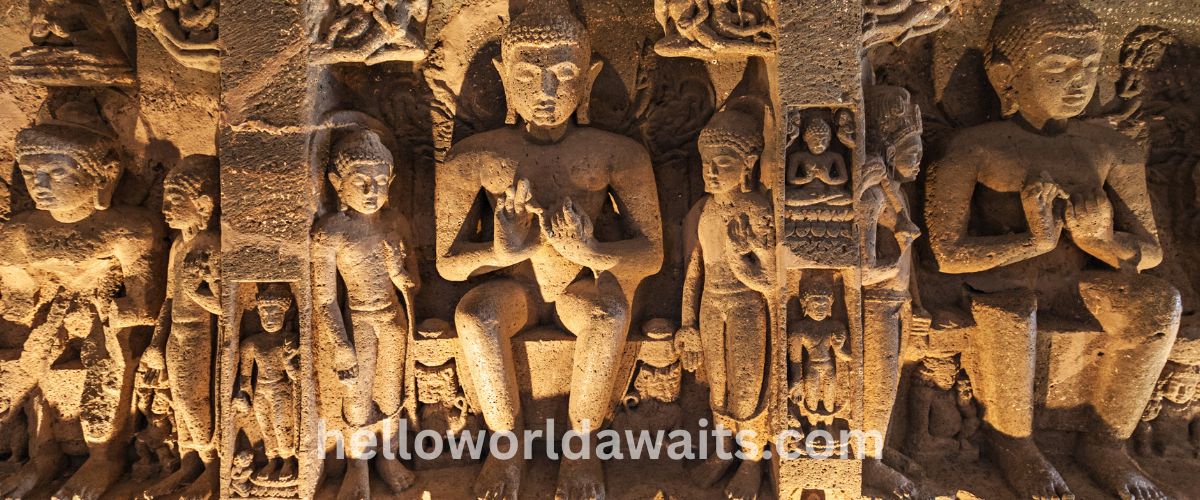
Ajanta Caves: Whispers of the Ancient Painters
Hidden deep in Maharashtra’s Sahyadri Hills, the Ajanta Caves are among India’s greatest archaeological treasures — and yet, many travelers overlook them. Dating back over 2,000 years, these Buddhist rock-cut caves house exquisite murals and sculptures that narrate the life of Buddha and ancient Indian society. The artistry here predates the Renaissance, glowing with colors made from natural pigments that have survived millennia.
As you stand in the dim light of Cave 1, gazing at a fresco of a Bodhisattva with half-closed eyes, you sense a divine stillness. It’s one of those secret places in India where silence speaks louder than words, and art becomes a bridge between the mortal and the eternal.
Majuli: The Living Island on the Brahmaputra
In the northeastern state of Assam floats Majuli — the world’s largest river island and one of India’s most spiritual hidden gems. Here, life moves at the pace of the river. Bamboo huts sway on stilts, monks in saffron robes chant prayers in ancient satras (Vaishnavite monasteries), and the island breathes a rhythm untouched by modern chaos.
Majuli isn’t just scenic — it’s soulful. It represents sustainable living, cultural preservation, and harmony with nature. Every year, when the Brahmaputra floods its banks, the people of Majuli rebuild their homes with resilience and faith. Travelers who arrive here seeking an offbeat experience find something much deeper — a lesson in coexistence.
Spiti Valley: The Cold Desert’s Sacred Silence
Tucked between Tibet and Himachal Pradesh lies Spiti Valley — one of the most remote places in India. Known as “The Middle Land,” it’s a world of stark beauty, ancient monasteries, and snow-capped serenity. Villages like Kaza, Kibber, and Langza seem to hang on the edge of heaven. The roads are rugged, the air thin, and the silence overwhelming — but it’s in this isolation that you find a strange peace.
When you visit Key Monastery, perched on a cliff overlooking the Spiti River, you feel both small and infinite. This is not a destination for luxury seekers; it’s for those who crave the raw pulse of the earth. Under the star-studded sky of Spiti, you realize that India’s true treasures lie far from its cities — in places where the universe feels close enough to touch.
Keoladeo National Park: A Symphony of Wings
In Rajasthan, where deserts dominate the horizon, lies an unexpected oasis — Keoladeo National Park in Bharatpur. Once a royal hunting ground, today it’s a UNESCO World Heritage Site and one of the finest bird sanctuaries in Asia. During winter, the wetlands come alive with over 370 species of birds — from Siberian cranes to painted storks and kingfishers.
Walking through the park at dawn, you’re enveloped by the hum of life — wings flapping, water rippling, the soft light painting everything golden. It’s a reminder that India’s hidden gems aren’t only historical or cultural — they’re ecological wonders too, delicate ecosystems thriving quietly away from crowds.
Why These Hidden Gems Matter
In an era where travel often means checking off famous spots, these offbeat places in India invite us to slow down. They challenge the notion that beauty must be popular to be meaningful. Exploring these remote places in India reconnects us with authenticity — where stories, people, and nature coexist in harmony. Whether you’re an adventurer, artist, or seeker, these destinations offer not just landscapes, but lessons.
India’s Best Kept Secret: The Spirit of Discovery
The real secret of India lies in its contrasts — in the ruins of Hampi and the stillness of Ajanta, in the spirituality of Majuli and the solitude of Spiti, in the living wilderness of Keoladeo. These are not just places to visit, but experiences to feel. They remind us that travel isn’t about escaping life, but about finding life’s essence in unfamiliar corners.
So the next time you plan your journey through India, go beyond the guidebooks. Seek the hidden gems. Because sometimes, the most beautiful stories are the ones that few have heard.